R. Mueller, G. Immobile
The Safe Genes program aims to deliver novel biological capabilities to facilitate the safe and expedient pursuit of advanced genome editing applications, while also providing the tools and methodologies to mitigate the risk of unintentional consequences or intentional misuse of these technologies.
The grant “Restoring Ecosystems and Biodiversity through Development of Safe and Effective Gene Drive Technologies” part of “The Safe Genes Program” of DARPA, is led by Dr. Keith Joung at Massachusetts General Hospital (MGH) in collaboration with investigators from Imperial College, Polo GGB, North Carolina State University, and Boston University.
CRISPR-Cas nucleases have rapidly emerged as powerful reagents for biomedical research and human therapeutics. In addition, gene drives based on these nucleases have been successfully engineered for mosquitoes and are being explored as a powerful potential method for effectively eliminating these disease vectors. Presently, there exist only limited options to robustly control and counter the activities of CRISPR-Cas nucleases and mosquito-based gene drives.
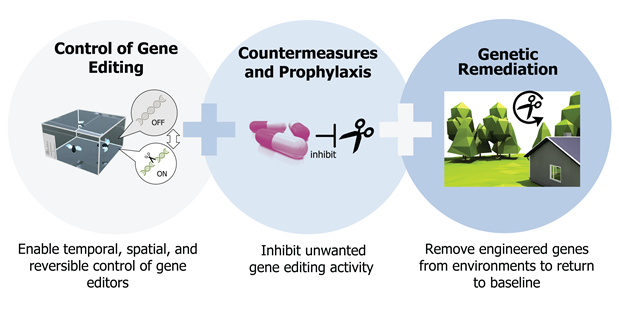
The goal of the project is the development of novel high-risk strategies to control, surveil, and counter the activities of CRISPR-Cas genome-editing nucleases and to apply these methods to regulate and protect against gene drives based on these nucleases. The partners will pursue a series of innovative and novel approaches that will yield the following deliverables: robust technologies for temporal and spatial cell-type-specific control of CRISPR-Cas nucleases; novel strategies to surveil for their mutagenic activities; highly effective reagents for countering both CRISPR-Cas nucleases and mosquito-based gene drives based on these enzymes; and substantially more sensitive methods for genome-wide off-target mutation detection in mosquitoes and human cells.