Transformative novel technologies that can have a great impact on our lives are always seen with a mix of expectations and fears. If from one side novel technologies hold promise, such as the elimination of diseases, on the other hand there are concerns of misuse or unpredictable risks.
An example of a technology that generates a mixture of high expectations and fear is gene drive.
Gene drive is a genetic element that bias its own transmission to the progeny, therefore it increases in frequency in a population, over generations. It is based on a natural biological phenomenon, and it has been proposed for controlling some vector-borne disease, for instance to control malaria mosquitoes. Genetically modified mosquitoes with a gene drive could be released to reduce the number of mosquitoes in a population and in doing so to stop malaria transmission. Gene drives have not been released yet and are still under development, with very promising results in laboratory settings and potential for release in five to ten years in countries where malaria is endemic, such as the Sub-Saharan region.
Research in the field of gene drives is also a great example of ‘responsible science’: scientists actively involved in the research and development of gene drives provide guideline and recommendations for research and suggests its use for beneficial purposes.
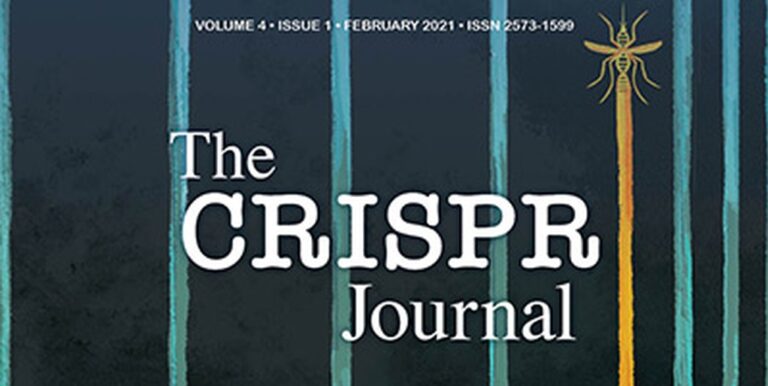
The publication in the CRISPR Journal of a ‘code of ethics’ for gene drives research, of which Greta Immobile, Ruth Müller and Alekos Simoni of Polo of Genomics Genetics and Biology are among the authors, is an example.
The code of ethics, addressed to all researchers working on gene drives, pledge to work consistent with the needs and interests of humanity, with respect for human dignity and human rights, and holding paramount public health, public safety, and ecological stewardship. It also commits to disclose the potential risks and benefits of technology in a view of transparency and responsibility.
Codes of ethics are not only useful tools for helping scientist to ‘do the right thing’, but they also demonstrate how research, and science in general, can be accountable and addressed to improve human lives, with great maturity and sense of responsibility.
Reference Annas, George J., Chase L. Beisel, Kendell Clement, Andrea Crisanti, Stacy Francis, Marco Galardini, Roberto Galizi, Julian Grünewald, Greta Immobile, Ahmad S. Khalil, Ruth Müller, Vikram Pattanayak, Karl Petri, Ligi Paul, Luca Pinello, Alekos Simoni, Chrysanthi Taxiarchi, and J. Keith Joung. 2021. “A Code of Ethics for Gene Drive Research.” The CRISPR Journal 4 (1): 19–24. https://doi.org/10.1089/crispr.2020.0096.
Image
Mon Oo Yee (University of Southern Denmark)